
Emergency plumber in Primrose Hill
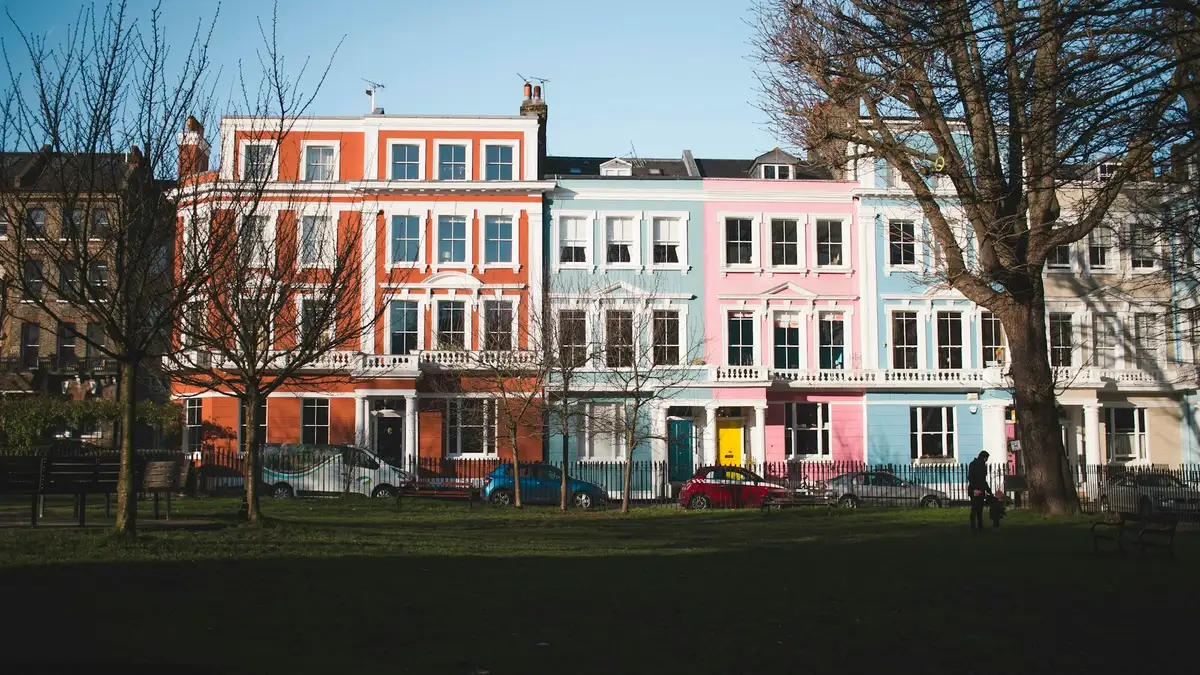
Primrose Hill is one of the best-preserved Victorian neighbourhoods in London. Its pastel terraces and villas were built from the 1840s onwards, and Chalcot Crescent’s curving terrace of twelve houses dates from around 1855. Many houses are listed, and the whole area is protected. That is what makes it special, and it is also why a plumbing emergency here needs a careful hand.
Tall houses, long journeys for water
A typical Primrose Hill house is narrow and tall, with a bathroom on an upper floor and rooms stacked above one another. When a pipe fails at the top of the house, water does not stay put. It runs along joists and down behind walls, and it can come through a ceiling two or three floors below. We trace leaks back to where they start, so we open up as little of your house as possible.
Repairs in listed buildings
Several houses on Chalcot Square are Grade II listed, and many others have their original cornices, shutters, floorboards and tiles. In an emergency we stop the water and make things safe first. After that, we repair like for like wherever we can, protect the floors and fittings we are working around, and we never cut into original features without talking to you first.
The outside of the house
The Primrose Hill Conservation Area was designated in 1971 and extended in 1985, and Camden has an Article 4 direction here that limits changes to the outside of homes. In conservation areas, a flue or a soil pipe on a wall that faces the street usually needs planning permission, and a listed building needs listed building consent for most external changes. If a boiler or a pipe has to change on the outside, we look for a route at the back first and tell you before anything is done.
Old pipes and hard water
Houses of this age can still have lead supply pipes. Thames Water says homes built before 1970 may have them, and they are dull grey, with rounded, swollen joints. The water here is hard, too, so cylinders and immersion heaters scale up over time and fail without much warning. When the hot water stops, the cause is often one of these, and we can usually tell you which once we arrive.
From Regent’s Park Road to Gloucester Avenue, call 07862 142953 or WhatsApp us a photo. If you have no hot water, see what to check first.
Primrose Hill at a glance
- Postcodes we cover
- NW1
- NW3
- Streets we often visit
- Regent's Park Road
- Gloucester Avenue
- Chalcot Square
- Chalcot Crescent
- Chalcot Road
- Fitzroy Road
- Albert Terrace
- Prince Albert Road
- Erskine Road
- Gloucester Crescent
- Elsworthy Road
- Local landmarks
- Primrose Hill park
- Regent's Park Road shops
- Chalcot Square
- Chalk Farm tube station
- Primrose Hill Overground station
- Common problems here
- Leaks running down through several floors of tall, narrow terraces
- Repairs to listed houses that must avoid damaging original features
- Exterior pipes and flues that need permission in a conservation area
- Old lead pipework in houses built in the mid 1800s
- Hot water cylinders and immersion heaters scaled by hard water
Questions people ask
My house is listed. Can you still do an emergency repair?
Yes. Stopping water and making things safe always comes first, and that is allowed in any building. For anything beyond that, we repair like for like where we can and avoid cutting into original plaster, joinery or tiling. If a lasting fix would change the fabric of a listed building, we tell you so you can check what consent you need.
Can a new boiler flue go on the front of my house?
Often not without permission. In a conservation area like Primrose Hill, a flue on a wall or roof slope facing the street usually needs planning permission, and listed buildings need listed building consent for most outside changes. We look for a route at the back first.
Water is coming through a ceiling two floors down from the bathroom. Is that normal?
In a tall terrace, yes. Water follows joists, pipes and floorboards, and can come out a long way from where it started. We trace it back to the source rather than opening up the ceiling where it shows.
How quickly can you get to Primrose Hill?
We aim to be with you within 60 minutes, 24/7.
Sources
- Primrose Hill, Wikipedia
- Chalcot Square and Chalcot Crescent, The Victorian Web
- Article 4 directions, heritage and conservation, Camden Council
- The Town and Country Planning (General Permitted Development) (England) Order 2015, Schedule 2, Part 1, Class G, legislation.gov.uk
- How to check for lead pipes, Thames Water
- Check your water quality, Thames Water